Showing posts with label Red Admiral. Show all posts

Wednesday, 14 October 2015

Sunflower (part two)

The Sunflower continues to attract butterflies. This Red Admiral is the third species I have seen nectaring after the Small Tortoiseshell and Peacock last week. A passing Speckled Wood didn't seem so interested. I have seen  this butterfly on the flower for three consecutive days, now.

Red Admiral on the Sunflower
Red Admirals have two generations each year. The first generation is migrant from France (or perhaps even further south) in springtime, and their offspring feed on nettles, emerging from late August to October and then heading south. In recent years, however, adults have been found overwintering in the south of Ireland (and England), So, as warming takes hold, we're seeing a transition from solely migrant to partially resident populations.

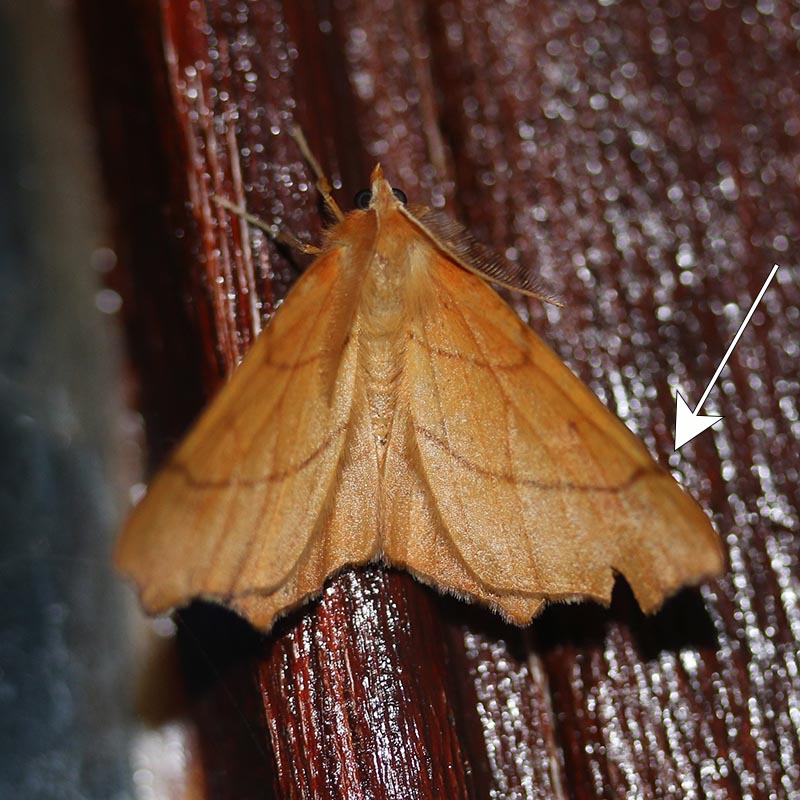
Phenology has also changed in some moths. Some species were described by their flying (or emerging) dates. So we have August Thorn, September Thorn, Winter Moth, November Moth, December Moth, etc. But in the couple of hundred years since they were named, weather patterns have changed, and their names are not so accurate nowadays. This August Thorn is a new species for my list, and can be separated from the September Thorn by the kink in the rear band of the forewing (arrowed).

August Thorn moth
This is a locally common moth, feeding on larger broad-leaved trees.

I suppose it's worth pointing out that the season for September Moth often starts earlier than the August Moth! Of course, it isn't just moths that are altering emergence and migration patterns. Birds like the Redstart and Fieldfare that used to arrive as winter visitors have become very scarce nowadays, since they stay in situ and overwinter further north. Flowering plants are also extending their flowering season. Have a look in plant books from a few decades ago, and their 'flowering seasons' will surprise you.
Wednesday, 3 August 2011

Every cloud

The weather has been abysmal for several days, with bad light even when it has been dry. Today I saw blue gaps in the cloud, so I ran for the hills, where the Angelica is abundant.

This hoverfly got me rather excited, because I knew I hadn't seen it before. Several shots were rattled off and anticipation was high during the rest of the photography session. When I got the pictures back to the computer and opened the books, I was slightly disappointed to discover it wasn't a new species for me, but merely a new colour variation of one that I had seen once before. It's the orange and black version of the bumblebee mimic Eriozona syrphoides.


The bumblebee-mimicking hoverfly Eriozona syrphoides
Eriozona syrphoides is the only bumblebee mimic to have an obtusely re-entrant (curved) vein at the position indicated by the arrow.

Note. I have amended the identification of this hoverfly as a result of a much better set of photographs taken a few days later.

Here's a shot of it beside an ichneumonid:

Eriozona syrphoides (right) and ichneumonid (left)

Staying with ichneumonids, this one has a quite impressive ovipositor:


Ichneumonid with long ovipositor
I saw a few of those wandering over Knapweed flowerheads, so we know what that ovipositor is used for.

This large brown specimen looks to be close to the Ophion family:

3 cm. ichneumonid

Dungflies are voracious hunters as adults (they're probably making up for all the dung they eat as larvae.) This one is making a meal of a smaller sawfly:
Dungfly with prey
But this dungfly has fallen foul of a little cream-coloured spider:

Spider with dungfly as prey

Now that's a truly vicious circle.

I was quite surprised to find a pristine Red Admiral butterfly nectaring on the Angelica:

Red Admiral butterfly
It's absolutely pristine, with no wear whatsoever, so it's clearly one of the local offspring of the early summer migrants. These feed solely on nettles as caterpillars.

At this time of year I always look closely at clusters of aphids on Knapweed. The larvae of the hoverfly Syrphus ribesii consume large numbers of aphids, and the female always makes sure her offspring have an adequate supply:

Larva of Syrphus ribesii with aphids

Meliscaeva cinctella is one of the later hoverflies, usually to be found from August onwards. Its larvae are also aphid eaters, but solely on tree-dwelling species, such as the Wooly beech aphid.


Meliscaeva cinctella hoverfly


Fairy Flax is a very delicate little flower which I tend to find near the edges of forestry, or along forest paths:
Fairy Flax

Just as I was getting out of the car, this leafhopper flew over my shoulder and landed on the path in front of me. Click.
The leafhopper Cicadella viridis